
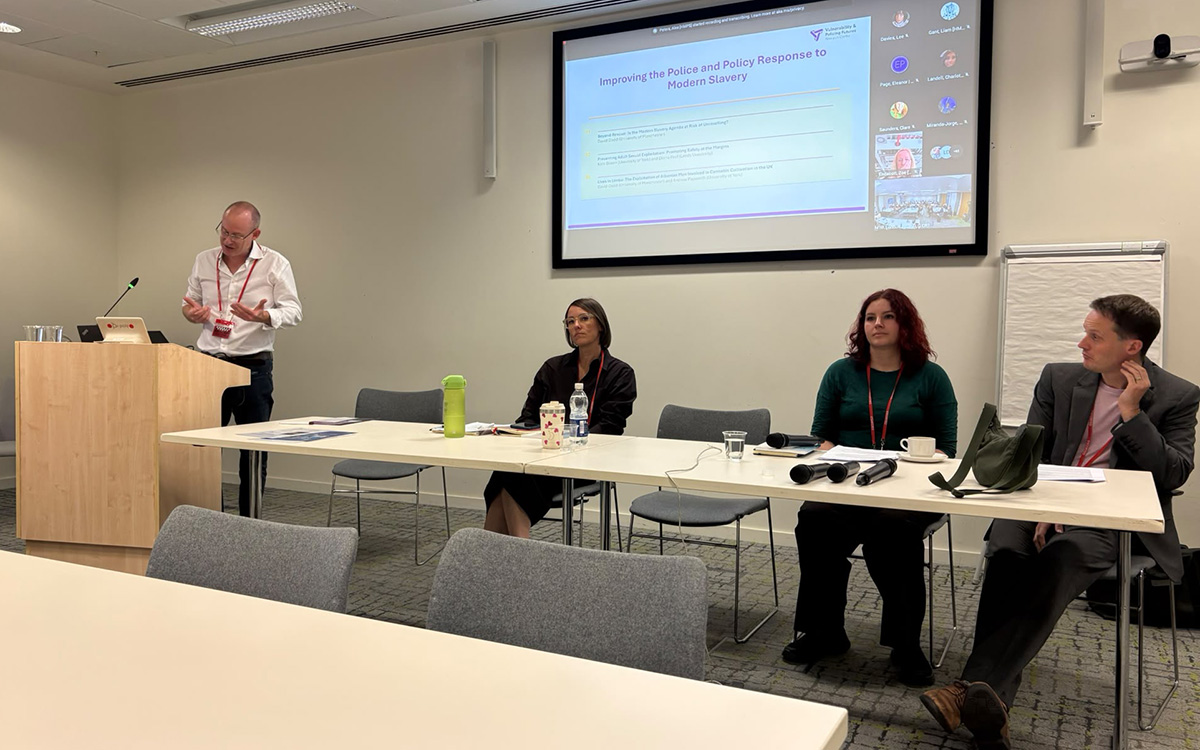
Researchers from the ESRC Vulnerability & Policing Futures Research Centre presented findings from their modern slavery and sexual exploitation research at the HM Prison and Probation Service Modern Slavery Conference this week.
24 September 2026
Co-Investigator Professor David Gadd (University of Manchester) shared insights from the Centre’s project “Improving the police and policy response to modern slavery”.
The research analysed more than 2,000 modern slavery crimes recorded by two police forces. It found that most recorded victims of modern slavery were male, many were under the age of 18, and criminal exploitation was the most commonly identified form of modern slavery. However, cases involving female victims and sexual exploitation were more likely to result in charges and therefore become visible through court proceedings and media reporting.
These findings raise an important question: does public understanding of modern slavery reflect the reality of the cases that are most common, or simply those that are most likely to be prosecuted?
Other members of the project team, which includes Professor Gadd, Professor Rose Jenkins (University of Manchester), Dr Andrew Papworth (University of York), Dr Diana Peel (University of Leeds) and Centre Co-Director Professor Kate Brown (University of York), presented at the conference.
Dr Peel and Professor Brown delivered a presentation on “Preventing Adult Sexual Exploitation: Promoting Safety at the Margins”, drawing on the research project’s findings.
Professor Gadd and Dr Papworth also presented findings on the criminalisation of Albanian men involved in cannabis cultivation, which formed part of the Centre’s wider modern slavery research.
The presentations highlighted the complex relationships between exploitation, organised crime, migration and labour markets, and explored how policy and practice can better protect people at risk of harm.
Concluding the session, Professor Gadd said:
“Our research shows that modern slavery cannot be understood solely through the lens of organised crime. Exploitation often emerges through complex chains of dependence and vulnerability that can involve criminal networks, labour market intermediaries and wider social and economic pressures.
“If we are serious about reducing modern slavery, we need to address the conditions that enable exploitation to flourish. This includes strengthening regulation of labour and housing markets, tackling the role of professional enablers, investing in economic opportunities in countries of origin, and confronting the consumer demand that fuels exploitative markets. A more preventative approach is essential if we are to reduce vulnerability and improve outcomes for those most at risk.”