

The ESRC Vulnerability & Policing Futures Research Centre has hosted its second annual conference in Leeds, bringing together leading academics, police professionals, policymakers, and community leaders.
11 September 2025
The two-day event, “Vulnerability and Policing: Reducing Harm, Strengthening Justice,” provided a critical platform for discussion on how research can drive improvements in policing and other public services for vulnerable communities.
Opened by Professor Nick Plant, Deputy Vice-Chancellor: Research and Innovation at the University of Leeds, the conference featured a rich programme of keynote speeches, presentations, and panel discussions that explored some of the most pressing issues at the intersection of vulnerability and policing.
Day 1 saw keynote presentations from Professor Carlene Firmin MBE (Durham University) on the realities of safeguarding young people from extra-familial harm, and writer, broadcaster, social commentator and hip-hop artist Darren McGarvey, who reflected on vulnerability, policing and the welfare state.
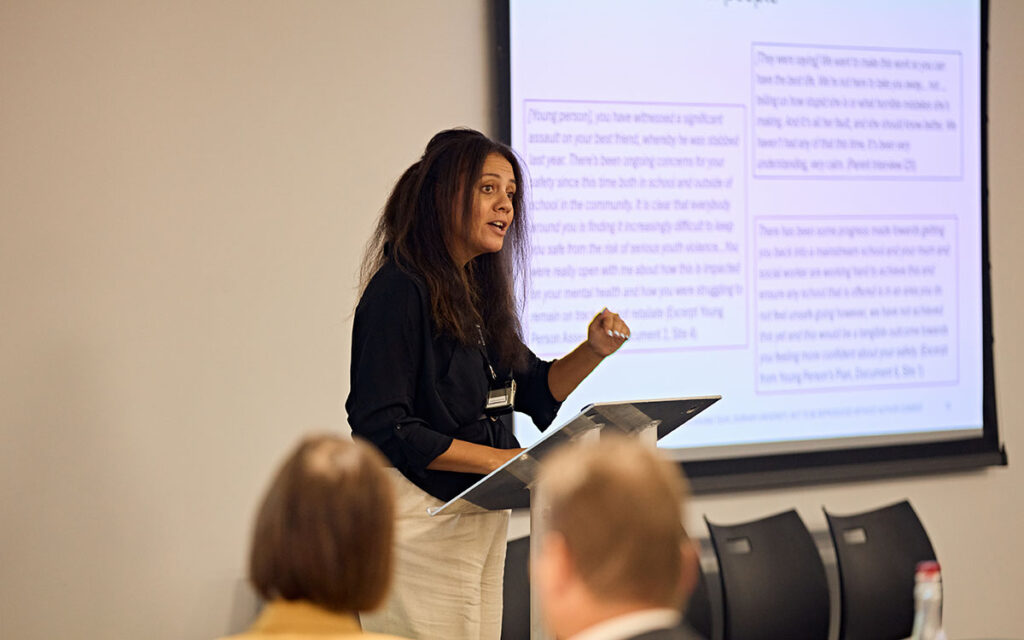
The sessions across both days provided new findings from the Centre’s research projects and insights on topics ranging from preventing harm among vulnerable people to the future of neighbourhood policing. Other key areas of discussion included women’s safety in public spaces, modern slavery, and the use of diversion for adults with vulnerabilities. These discussions underscored the Centre’s commitment to a collaborative, whole-system approach to positive change.
The event closed with a panel discussion on “Advancing Change in Policing and Service Provision for Vulnerable People: Opportunities and Challenges”. Temporary Deputy Chief Constable Catherine Akehurst (NPCC Programme Lead, Neighbourhood Policing Guarantee), Meg Jones (Director of New Business and Services, Cranstoun) and Ben Lindsay OBE (Founder and CEO, Power the Fight) reflected on lessons from the conference, as well as the key priorities for research to influence policy and improve practice around vulnerability and policing.
The conference exemplified the Centre’s mission to bridge the gap between research and practice. Participants from policing, public health, social care, education, the third sector, and people with lived experience engaged in lively debate, exploring how to apply evidence-based research to policy and operational practice.

Professor Kate Brown, Co-Director of the Vulnerability & Policing Futures Research Centre said: “This event built on the success of the previous year’s conference, further solidifying the Centre’s role as a vital hub for knowledge exchange and collaborative action. The positive feedback from attendees and the active engagement from a diverse range of sectors highlights the shared commitment to reducing harm and strengthening justice for vulnerable individuals and communities.”
New reports
To coincide with the conference, the Centre launched five new reports summarising findings from its projects. Read them below:
- Developing AI tools to help quantify police involvement with vulnerable people
- Responding to family violence/domestic abuse: lessons from Greater Manchester (UK) and Victoria (Australia)
- School absence, academic attainment, and young adults Not in Education, Employment or Training
- Lost in translation: raising awareness of Roma culture within policing
- Recognising the risks and harms for repeat missing children from different residential environments through a child and practitioner lens