
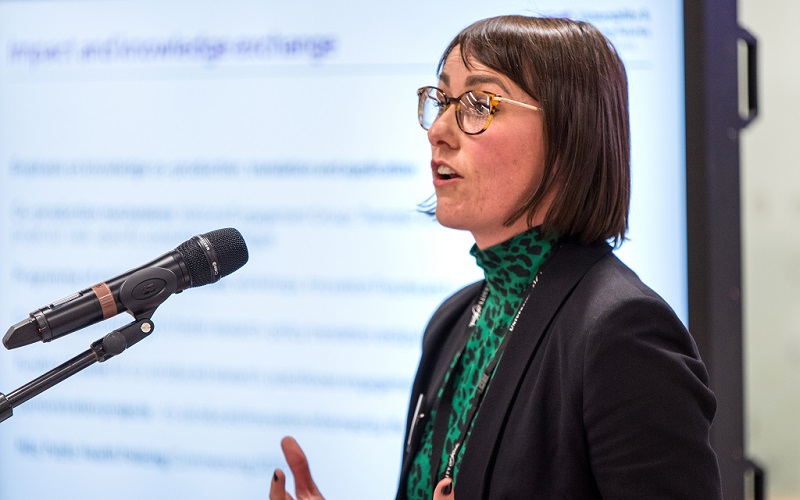
Dr Kate Brown, Deputy Director of the Vulnerability & Policing Futures Research Centre has spoken about how different people and organisations interpret ‘vulnerability’ at an international conference in Austria.
Held at the University of Graz, the conference focused on vulnerability theories and concepts in philosophy and social sciences.
Dr Brown’s keynote looked at how the definition of ‘vulnerability’ varies across regions, sectors and organisations as well as how this shapes responses to vulnerability in practice.
She noted that although vulnerability scholarship is gathering pace, it has not managed to keep pace with the increased focus and use of the term ‘vulnerability’ in policy. She argued that this poses challenges for practical interventions as researchers look for a consistent conceptual understanding of ‘vulnerability’ to base their empirical investigations and policy and practice recommendations on.
In the talk, Dr Brown examined the tensions involved in work around ‘vulnerability’. She highlighted that ‘safeguarding’ vulnerable people is a vital element of the work the state does to prevent significant harm. However, ‘safeguarding’ work can also involve harm to vulnerable people. For example, policies protecting ‘vulnerable’ sex workers can have the result of increasing vulnerability in practice, such as providing rationale for police raids on working premises and deportations of migrant sex workers.
Dr Brown’s keynote argued that to be classified as vulnerable, people are expected to navigate a tightrope between lacking agency and possessing agency. This highlights that classifications of ‘vulnerability’ are ill-defined and especially prone to being shaped by the preferences, values, commitments and preoccupations of those who administer them.
In particular, Dr Brown referred to her previous research that looked at how people who have experienced child sexual exploitation viewed ‘vulnerability’. The talk ended with the picture of a phoenix, created for an animation made by young people with experience of sexual exploitation, to show them moving on from their experiences.
This content may be difficult to watch, in particular for those that have had or are going through similar experiences.
“Somewhat by stealth, the concept of vulnerability has crept into a raft of contemporary policies and practices – from violence against women to volcanoes, both in the UK and internationally.
“Although vulnerability is used frequently in social policy and interventions, its meaning remains an elusive matter and taken-for-granted assumptions about the concept are common, definitions are sometimes given, sometimes not, and where given they vary wildly across policy domains.
“We need to be aware of dilemmas around responses to vulnerability. We should recognise the adversity and strength of ‘vulnerable’ people as well amplify the perspectives of those from marginalised communities.
“It is vital that we develop a concept of ‘vulnerability’ to help us frame where the problem is located and what it constitutes. However, concepts alone can’t help us address the issues at hand. Vulnerability does open up potentially progressive routes for action on injustice, but we need deeper and more coordinated action to make lives more liveable.”
The conference ‘Vulnerability: Theories and Concepts in Philosophy and the Social Sciences’ took place from 20-22 October at the University of Graz, Austria.