
This strategy sets out how the Vulnerability and Policing Futures Research Centre works with people with lived experience to co-produce research on vulnerability and policing.
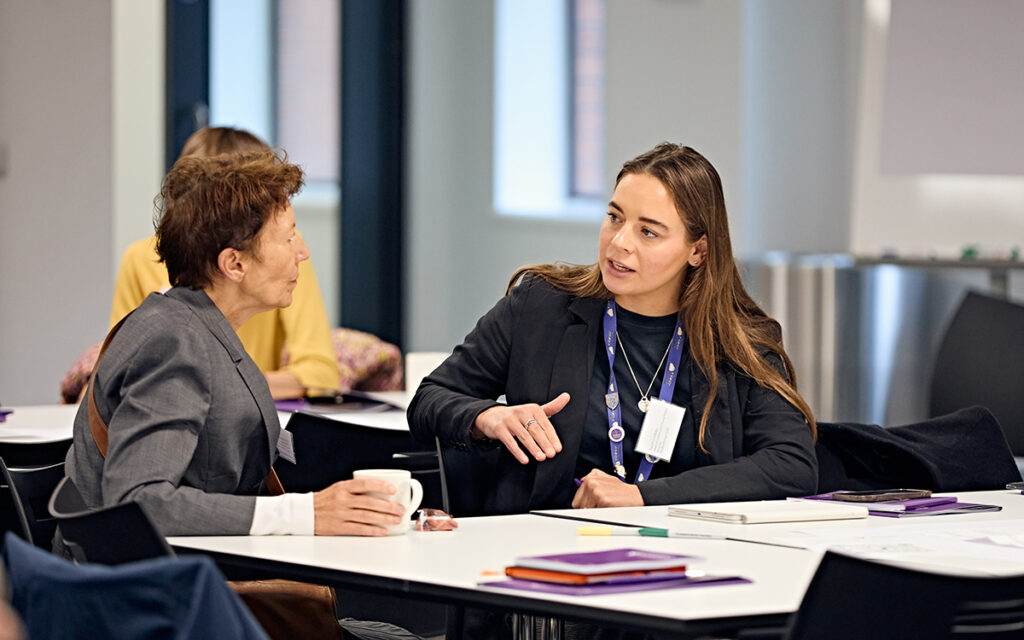
Working collaboratively with communities is an important way to improve public services (Halpern et al., 2004; Needham, 2008; Holmes, 2017). When Universities are doing research, it is crucial they do this in collaborative ways. This means involving communities that are stakeholders in research in the process of doing the research. Often this is called ‘co-production’.
The Vulnerability and Policing Futures Research Centre is a 5-year research programme focussed on improving responses to vulnerability in policing-related public services. Key to our values is collaboration with services such as the police, health, education, social care and central government and importantly, people who know about policing-related responses to vulnerability because of their life experiences. Working with people whose expertise comes from their experience is especially important to help improve the responses of police and other services to vulnerability.
This document sets out how the Vulnerability and Policing Futures Research Centre works with people with lived experience to co-produce research on vulnerability and policing. Experts by experience were consulted in the development of the strategy1. The research about ‘what works’ helps us with this strategy. It is a live document and we welcome your views on it. Ways to contact us are listed at the end.
1 We would like to thank Revolving Doors (Zahra Wynne and colleagues) and Changing Lives (Steph McCusker and colleagues at the Women’s Wellness Centre team, York) for their work supporting the consultation with people with lived experience. Thank you to the 10 people with lived experience of vulnerability and policing who advised us on this strategy.
Co-production is defined in different ways by different people. When we refer to co-production we mean:
Bringing together parties that may have markedly different priorities and interests, with the aim of working together towards mutually agreed shared goals (Crawford, 2020; 506)
Co-producing a research project is where researchers, practitioners and members of the public work together, sharing power and responsibility from the start to end of the project, to generate and communicate research findings (NIHR, 2021).
In our research, ‘experts by experience’ and ‘people with lived experience’ are people whose experiences mean that they have been or could potentially be responded to as ‘vulnerable’ by police and other agencies. This might be people who are:
- victims of crime;
- potential victims;
- people who have committed crimes and also faced significant adversities in their lives.
This means in our research, people with lived experience are a diverse group, with varying ages, ethnicities, ‘races’, genders, (dis)abilities, sexualities, migration statuses etc.
We recognise that some people find the term ‘vulnerable’ stigmatising, whilst others find it a useful way to highlight experiences of harm and injustice. Discussing and defining vulnerability in better ways is one of the things the Centre is trying to do.
Borrowing from our partners working on long-term community research in Bradford, our co-production work is guided by the ActEarly co-production principles developed with communities:
- Principle 1: Power should be shared amongst all partners
- Principle 2: Embrace a wide range of perspectives and skills to ensure these are represented in the project
- Principle 3: Respect and value the ‘lived experience’ and how different forms of knowledge can be expressed and transmitted
- Principle 4: Ensure there are benefits for all parties involved in the co-production activities.
- Principle 5: Go to communities. Do not expect communities to come to you.
- Principle 6: Work flexibly
- Principle 7: Avoid jargon and ensure communities have access to the right information at the right time
- Principle 8: Relationships with communities should be built for the long-term and not for the short-term.
- Principle 9: Co-production activities with communities must be adequately resourced.
A commitment to meaningful action underpins these principles.
Our research on vulnerability and policing has three strands:
- Understanding vulnerability in places (cities and urban neighbourhoods) mainly using administrative data from agencies such as police, social services, health, education, but also via interviews and focus groups with key people/groups
- Exploring particular vulnerability problems such as county lines, child sexual exploitation, homelessness, modern slavery, domestic abuse, mental illness
- Investigating public attitudes and understanding, mainly through surveys, focus groups and discussion forums
Each of these strands uses research methods such as interviews and focus groups which allow in-depth engagement with a variety of lived experiences.
People with lived experience are likely to be different groups depending on the task or project in question. This diversity is important. Methods and the people involved in co-production will therefore be different depending on the project or task in question. This means we take a project-by-project approach.
Overall and across the various strands of our work we aim to:
- Involve experts by experience in agenda-setting
- Work with people with lived experience to develop research tools (such as surveys or interview guides)
- Discuss research findings with experts by experience, taking account of their perspectives in the write up of findings
- Consult experts by experience when developing tools for change such as particular interventions or ‘toolkits’
We understand that tokenism can be an issue in this type of work. After co-production sessions, action should be evident. A brief note of action points can be kept and where possible sent to those involved. We also have a panel of independent experts called an Ethical Oversight Panel (EOP), who hold us to account for doing co-production that is ethical and meaningful. This panel includes experts by experience.
We actively seek diversity of perspectives and people in co-production work with people with lived experience. We involve people affected by different vulnerabilities and crimes, as well as people from different social groups and backgrounds. We will work to avoid certain people’s voices (such as community leaders) becoming too dominant. Our work should acknowledge which people/groups we did and didn’t manage to include in our co-production.
Experiences with relevance to vulnerability and policing (as defined in section 2) affect many people’s lives, including those working in the Centre. Lived experience relevant to our work will be deliberately included and valued in our team. For example, particular projects are led by researchers who have lived experience, and key advisory groups such as the Ethical Oversight Panel include people with lived experience. When people share sensitive personal information we support them and appreciate the perspective this provides. We work creatively to respect and value expertise by experience where people prefer this to be private, as well as when they are ‘out’ or more open.
We work with experts by experience in a range of ways depending on what is safe and practical. We always try to work in ways that are accessible. Ensuring no harm is done is always the utmost priority. In some of the research areas we focus on, people may be in especially vulnerable or potentially life-threatening situations. Risks to the safety of every individual we involve in our research process is proactively considered and action taken in response.
University research has very strict systems of regulation for doing research with vulnerable people. Every research project we do has to have ethical approval granted by the university it is led by. Co-production aspects of each project will be detailed in every project’s ethical approval2. More information about this is available via the University of York and the University of Leeds. The Centre also has an ethics checklist for doing co-production with people with lived experience, available on request and developed from the advice of experts by experience.
As experts by experience advised; trust, confidence and safety is so important when working around vulnerability and policing. People may be dealing with trauma and adversity. This means involvement in research may come at high personal cost. We will strive to ensure benefits from our research outweigh risks and burdens. The Centre team proactively assesses potential burdens and seeks ways to minimise them.
To ensure we do no harm, we will mainly work in partnership with other agencies to involve experts by experience in our work. Sometimes people work with us directly without another organisation being involved (an advisory groups for example). We only work with experts by experience directly where we have weighed up risks and feel this is safe and likely to be a positive experience overall.
2 We note the need to consider the ethical review process for doing co-production. We have an ethics checklist which guides us on this.
Even more than in other public services perhaps, policing is characterised by power relations and hierarchies. This means there are important power dynamics to take account of in co-produced policing research (Crawford; 2020: 510). Experiences highlight the tendency of police to dominate agendas due to the power and resources invested in them by the state. The voices and perspectives of socially marginalised people are less heard in the context of policing. Criminalised people may not want to be visible. Victimised groups may be dealing with stigma and discrimination. Marginalised communities may be further stigmatised through being associated with crime research especially.
Co-production does not mean that all partners necessarily agree on the problem or evidence. In vulnerability and policing matters, conflict and conflicting perspectives may be the healthy expression of different interests. We may need to work with conflict sometimes, attending to power dynamics. In such instances we will:
- Acknowledge the presence of conflict
- Recognise and name power differentials in any conflicting perspectives
- Respect difference and seek to foster respect for different perspectives
- Avoid direct confrontations where these will cause harm
- Use creative means to ensure those with less power are heard alongside those with more power, in ways that prioritise safety and avoidance of harm
- Seek to avoid particular individuals or groups becoming too dominant, trying to draw out collective concerns and shared perspectives
- Attend to people’s support needs where conflicting perspectives cause stress
Avoiding harm – unintended or direct – will guide all of our work in managing power differentials and conflicting perspectives.
Maximising involvement in ways that are safe and within the resources we have available is an ‘instinct’ underpinning our research process. We tailor the methods we use according to those people we are engaging with for a specific purpose or project. We use a practical approach focussed on facilitating involvement, problem-solving barriers to involvement. We take our work to people with lived experience in safe and diverse ways (including informally, virtually, via social media, in group settings, forums, meetings, phone calls etc).
It can be helpful and empowering for people to work together in groups on research projects, but when people are vulnerable being in groups might cause them harm. We will work with people in groups or as individuals depending on what is safer and most preferred by the people involved on a case-by-case basis.
Specific projects lend themselves to working with experts by experience in particular roles, for example co-producing a set of resources, co-producing an event etc. In these cases we make direct task-specific approaches to experts by experience, inviting them to work with us on specific projects with clearly designated roles and on clear objectives, with start and end dates, with details of payments agreed at the outset. Most often this is working in partnership with another agency who is working with a group of experts by experience, although sometimes we work directly via independent relationships where trust is suitably established and where this is practically possible and not going to cause harm.
Payment of experts by experience is in several forms:
- Payment for undertaking research interviews
- Per session or hourly rate payment for co-production sessions
- Consultancy work on designated projects
- Payment through a partner who pays people, with Centre paying the organisation
Our rates of direct payment are set broadly consistently at an hourly, half day or daily rate, but do vary slightly according to the challenges of each project. For more information please contact us. We assess risks of social security payments being affected by payment for co-production work.
We also fund support for engagement, such as translation costs, travel to involvement meetings, reimbursing for childcare wherever possible and where this does not affect financial state benefits.
We recognise facilitation of involvement work by support organisations such as charities can be resource intensive and is also an ethical issue. This facilitation work can place a further burden on already-stretched services. In recognition of this we always work to ensure there are benefits for those services who work with us, including agreed payments for facilitation work to those who are managing on limited resources. Benefits in kind (such as publicising their work) are proactively discussed and agreed in advance. This helps ensure we do not detract essential resources from work supporting the most vulnerable.
Get in touch
If you want to give us feedback or suggestions about this document we would really like to hear from you.
Please contact us by emailing [email protected]