
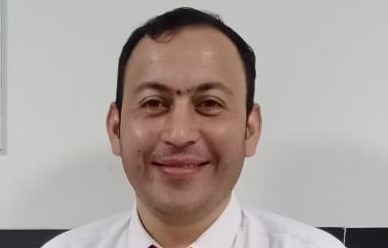
Dr Adnan Ashraf
Social Welfare Officer and Adjunct Lecturer in Sociology, Civics and Community Engagement
Paraplegic Centre Peshawar
Tell us about yourself
I am a Social Welfare Officer and Adjunct Lecturer in Sociology, Civics and Community Engagement at the College of Physical Medicine & Rehabilitation, Paraplegic Centre Peshawar, Department of Health.
I hold a PhD in Social Work from the University of Peshawar, Pakistan, and bring over 15 years of experience across government, humanitarian and development sectors.
My research and practice are grounded in qualitative inquiry, with Qualitative Research Methods training delivered by the Faculty of Social Work, University of Calgary, which strengthened my engagement with ethnographic, phenomenological, narrative analysis, socio-ecological, and integrated theoretical approaches.
Professionally, I remained part of child protection systems, child protection unit, child helpline and emergency response mechanisms in post-conflict and disaster-affected settings. I have directly managed and supervised over 2,000 child protection cases involving sexual abuse, exploitation, early marriage, in conflict with law, corporal punishment, out of parental care, institutionalize and alongside extensive field practicum supervision of BSW/MSW social work students.
I am engaged in ongoing international research collaborations focused on transforming masculinities, including work with the Transforming Masculinities research group at the University of Calgary and the Muslim Masculinities – Men in Gender Justice and Violence Prevention initiative. This work explores men’s roles in gender justice and violence prevention, including the use of digital narrative storytelling as a research and engagement method.
Alongside my research, I am affiliated as a Youth Member and Caretaker Cabinet Minister of Health within the Provincial Youth Assembly, where I contribute to advocacy, policy dialogue, and youth led social change initiatives.
Why did you want to become a Research Affiliate?
I wanted to become a Centre Affiliate as my area of research interest is aligned to the interdisciplinary approach of understanding vulnerability, victimisation and institutional power as practiced by the Centre.
My doctoral thesis covered both the cross-section of masculinity, power, and psychosocial vulnerability in sexual offending and a critical evaluation of policing, the legal, and welfare responses to child sexual abuse. The work is related to the larger theoretical discussions on vulnerability, governance and how the state relates to the management of risk, harm and protection. The focus of the Centre on cross-disciplinary cooperation provides a perfect setting to broaden this to include criminology, policing studies, social policy and applied ethics.
As a Centre Affiliate, I would welcome opportunities to contribute to policy-relevant research, engage in cross-sector dialogue and support the translation of empirical findings into practice. I see this affiliation as a valuable platform for collaborative research development, policy engagement and strengthening ethical, child-centred responses to vulnerability within policing and allied services. I consider this association enhancing my own work by means of interaction with top researchers, and making theoretical-based, empirically-based insights into the issues of vulnerability and policing.
How does your research connect to the Centre’s mission and values?
My work aligns closely with the mission and values of the Centre, focusing on the complex interplay of psychosocial, institutional, and structural factors that contribute to vulnerability, as well as on strengthening systemic responses to harm through evidence‑based and ethically grounded approaches. I have almost eight years of professional experience in child protection systems and child helplines that provide services to individuals exposed to violence, abuse, exploitation, and neglect.
My doctoral research, Exploring Psychosocial Factors and Institutional Responses toward Perpetrators of Child Sexual Abuse: A Case Study of Central Jail Peshawar, Pakistan, employed a multilayered critical analysis of sexual offending. It examined both the psychosocial motivations of individuals and the wider legal, penal, and institutional policy frameworks. Drawing on perspectives from judges, clinical psychologists, religious scholars, and child protection experts, this work reflects the Centre’s commitment to interdisciplinary inquiry into vulnerability, risk, and responsibility.
My recent work on punitive responses, sex offender registries, and intervention practices, focusing on prevention, rehabilitation, and systemic reform, also aligns with the Centre’s values, particularly its challenge to punitive models and its advocacy for approaches centred on prevention, reintegration, and structural change.